
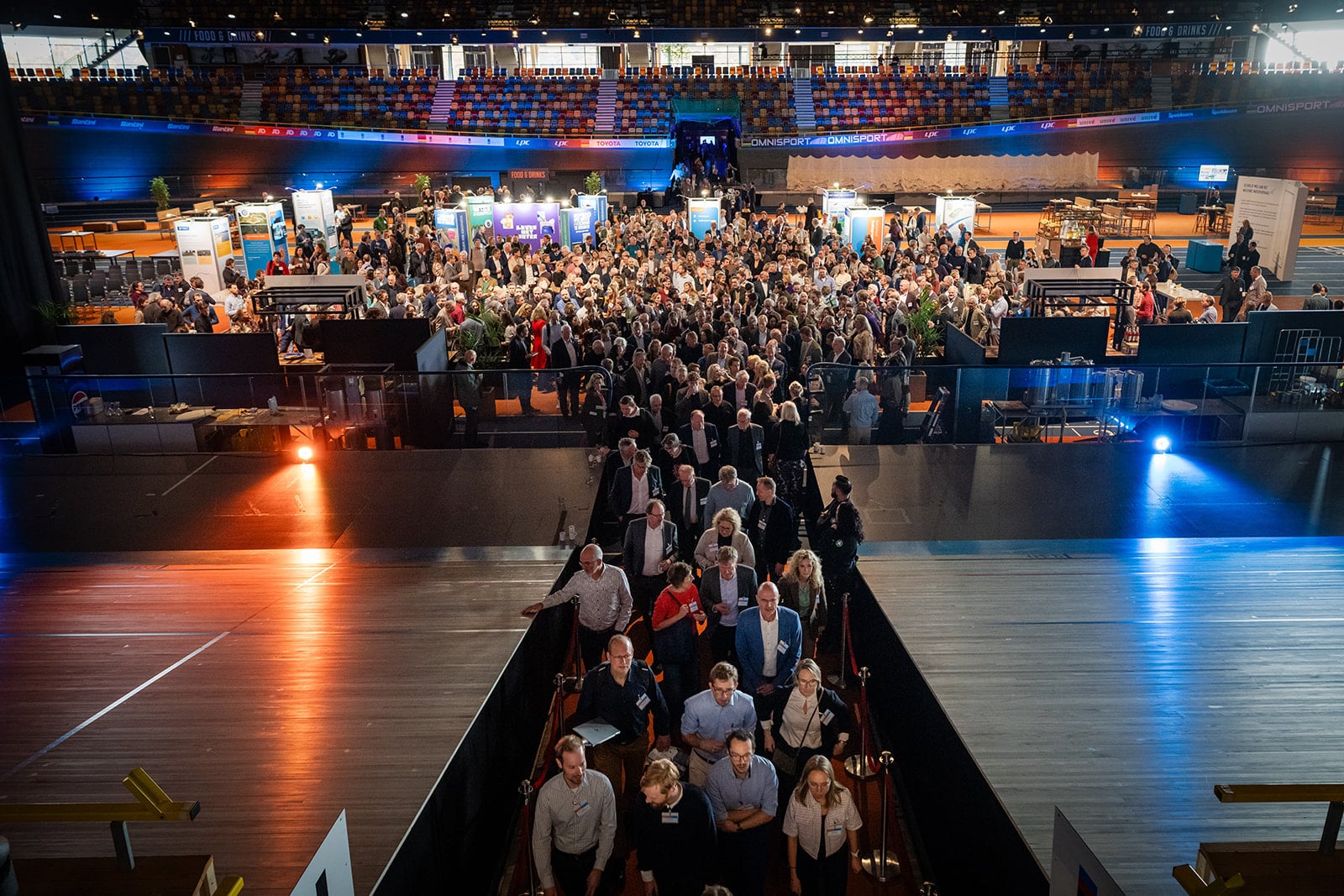
This summer’s drought has made clear that climate change is happening. The Netherlands must therefore rethink how it approaches the future of its delta. Rather than aiming to control everything, we should move towards building resilience. That was the main message of the 17th National Delta Congress, held in Apeldoorn on November 12, 2026. Around 1,250 water professionals gathered there, with another 250 following the event online.
“Climate change is already affecting us,” said Delta Commissioner Co Verdaas during the plenary programme. “That is why, following last summer’s drought, we delivered a powerful message: we need to shift our mindset from control to resilience.”
And that message has clearly taken hold, according to the Delta Commissioner. “Nobody has said: ‘What nonsense, it’s really not that bad.’ Everyone is behind it. That is the result of a great deal of knowledge, expertise and research – but also of many conversations. We have delivered that message as a community.”
Water is a spatial planning issue
For the first time in the history of the Delta Congress, two ministers took the stage together: Vincent Karremans, Minister of Infrastructure and Water Management, and Elanor Boekholt-O’Sullivan, Minister of Housing and Spatial Planning. Their joint appearance sent an important message: water is increasingly a spatial planning issue, and the two portfolios are therefore inseparable. “We literally need to get together around a map and ask ourselves: what can go where?” Karremans said. After all, measures require space, and that same scarce space may be needed for other purposes too.
Creating more room
Boekholt-O’Sullivan stressed the importance of water and soil as guiding principles for spatial planning decisions. The new National Spatial Planning Policy (‘Nota Ruimte’) provides an important framework for this, but, she warned, “it will only work if we all put it into practice together.” The policy, she said, will make the Netherlands “not bigger, but more spacious”. She compared it to tidying up your house and discovering: “Hey, I actually have more space than I thought.” In this context, tidying up means taking water and soil into account from the very start of the planning process. Developers want to do this, Boekholt-O’Sullivan emphasised, and they are capable of doing so. “But they do need some help. After all, it’s not just about putting up buildings; it’s also about creating a community.”
It is a huge puzzle, but nobody has to solve it alone, the Minister of Housing and Spatial Planning said. “We really are doing this together.” Her colleague Karremans was equally positive: “The word ‘delta’ has become synonymous with determination. And that is a good thing: we need determination, especially given the enormous challenges ahead. That is why we are working on establishing a third Delta Committee.”
Investing in the water transition
Businesses, too, need to prepare for a future in which water is becoming scarcer. That was the message from Stefaan Decraene, CEO of Rabobank, in his keynote presentation. “A large part of Rabobank’s lending portfolio is dependent on nature and climate,” he explained. He announced that the bank would make available more than 60 million euros for circular water use and technologies that reduce the use of pesticides in agriculture. “Many farmers are still hesitant to invest in these technologies because they are unsure whether the investments will pay off,” Decraene said. “We want to lower that barrier and get the ball rolling.”
A third Delta Committee
Delta Commissioner Co Verdaas spoke about the successful campaign to secure the renovation of the sea lock at IJmuiden. “But over the coming decades, we will need another ten ‘IJmuidens’,” he said. “We cannot keep relying on this kind of lobbying every single time.” If we are serious about moving from control to resilience, he argued, we must acknowledge “that we have chosen to live in a marshland – and then set in motion a fundamental shift in our mindset”. That will only happen if we no longer need to lobby for individual projects, and start looking at everything from the perspective of a shared vision for the future, he emphasised. “That may well be the most challenging Delta project of all. That is why I have recommended establishing a third Delta Committee.”
Verdaas ended with a call to action. “Whatever you are planning, ask yourselves this question: am I protecting my own interests, or am I helping to bring a better future within reach?”
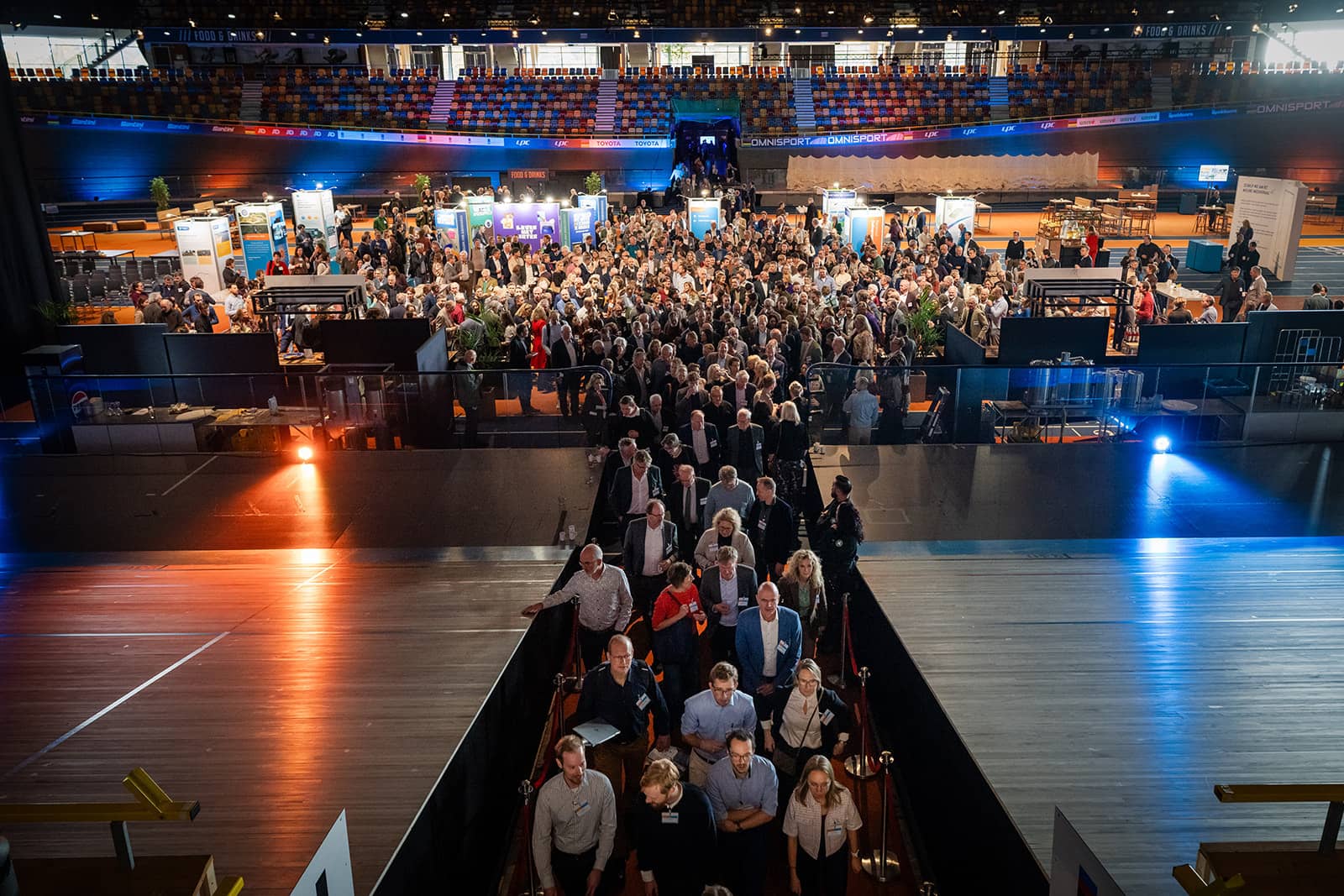
Image: © Martijn Beekman
The Ray of Sunshine Award: ‘The future takes the lead’
A festive annual tradition at the National Delta Congress is the live audience vote for the Ray of Sunshine, an award that recognises inspiring climate adaptation projects. This year’s theme was ‘The future takes the lead’. Three initiatives were nominated: Yuverta, which combines education and innovation in green roofs and rainwater storage; organic farmers Jan de Koeijer and Niels Heining, who have created their own water reservoir on their land to ensure an adequate supply of fresh water during droughts; and drinking water company Vitens, with a collaborative project in which water from streams helps combat the effects of drought.
Participants cast their votes live during the congress. The two organic farmers emerged as the winners. Ans Mol, Provincial Executive Member for Gelderland and chair of the Rhine Delta Programme, and Marijn Ornstein, chair of the Vallei en Veluwe Water Authority, presented the award to Niels Heining. He accepted it with a call to the audience: “I urge you all to buy as many organic products as you can!”
Breakout sessions
The remainder of the afternoon was devoted to sixteen breakout sessions, covering topics including sea-level rise, nature-based coastal protection, climate resilience, the potential collapse of the Atlantic Meridional Overturning Circulation (AMOC), cooperation between provinces and water authorities in the Flood Protection Programme, and transparency about freshwater availability.
Reports on these sessions and the plenary programme will soon be published in a special edition of Deltanieuws, available on the Delta Programme website.
Excursions
Every year, excursions are organised on the day before the National Delta Congress, visiting sites in the host region. They bridge the gap between theory and practice, showing the challenges facing the water system, as well as possible solutions, and how local partners are addressing them. This year, participants could choose from eight excursions, ranging from ‘Working towards a drinkable IJssel River’ and integrated measures in the historic Nijbroek polder to a city park, a climate-adapted street and restored streams in Apeldoorn’s city centre.